The best co-parenting app for high conflict: what each one filters, records and costs
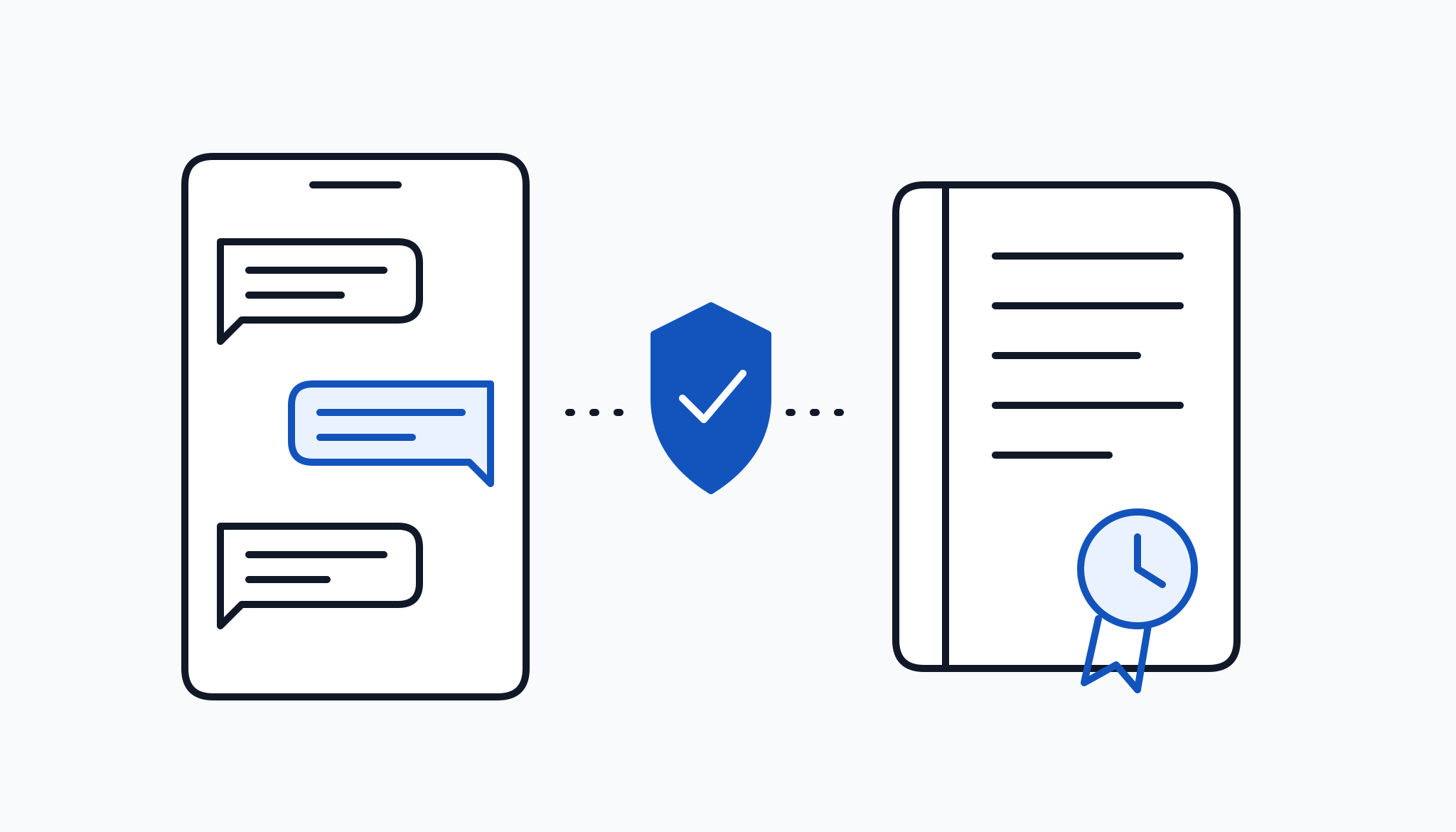
- No single app is best for every high conflict case. The right one depends on whether the other parent will join, whether you need hostile messages filtered, and what your court order names.
- TalkingParents and OurFamilyWizard are built around two linked accounts with records neither parent can edit. Both offer fee waivers for financial hardship and for domestic violence survivors.
- BestInterest is the one built around filtering. Its Protect plan screens incoming hostile language, and its free plan has no time limit.
- If the other parent will not join, AppClose has a Solo Mode and BestInterest gives you a separate phone number they can text as normal.
- Every one of these apps records what passes between the two homes. None of them records your own days with your children.
What is the best co-parenting app for high conflict?
It depends on which problem you are trying to solve, and on what your court order says. If an order names a specific app, that is the app, and the rest of this page is about how to use it well.
Without an order, the choice usually comes down to one of four needs:
- A record neither parent can edit: TalkingParents is built around exactly that, from $7 a month. OurFamilyWizard covers it too, with more scheduling and expense tools, from $110 a year per parent.
- Hostile messages filtered before you read them: BestInterest, on its Protect plan at $14.99 a month.
- The other parent refuses to join: AppClose’s Solo Mode, or BestInterest’s Boundary Line number.
- The lowest cost: BestInterest’s free plan, or AppClose at $7.99 a month after a 60-day trial.
Prices verified on each company’s own pages between 7 and 11 October 2026.
What features matter in a high conflict case?
A narrow set, and most of them are about the record rather than the conversation:
- Messages that cannot be edited or deleted after they are sent, by either parent.
- Read times, so there is no argument later about whether a message was seen.
- Recorded or logged calls, for families where calls are where things go wrong.
- An export or a verified report an attorney can work from.
- Professional access, so an attorney, mediator or guardian ad litem can see the thread directly.
- A tone check or filter, which helps some families and changes nothing for others.
Features that matter less here than the marketing suggests: shared calendars with color coding, photo albums, and anything built on the assumption that both parents want to plan together.
How do the apps compare?
| Price, one parent | Free option | Hostile language | Works if the other parent refuses | |
|---|---|---|---|---|
| TalkingParents | $7, $16 or $32 a month | 30-day trial, fee waiver | Sentiment Scanner and Writing Assist, Ultimate plan | No, built around two accounts |
| OurFamilyWizard | $110 to $299.88 a year | No trial, 30-day refund, fee waiver | ToneMeter and Writing Assistant, Essentials and up | No, each parent subscribes |
| BestInterest | Free, or $9.99 to $29.99 a month | Free plan, no expiry | Filters incoming messages, Protect and up | Yes, through Boundary Line |
| AppClose | $7.99 a month on the web | 60-day trial, fee waiver | Not described | Yes, Solo Mode |
| coParenter | $12.99 a month | 30-day trial | Not described | Not described |
| Custody X Change | $72 or $144 a year | No trial, 30-day refund | Hostility monitor in messages | Yes, except messaging |
Each row verified against the company’s own pages: BestInterest and AppClose on 11 October 2026, OurFamilyWizard on 9 October, TalkingParents on 8 October, coParenter on 7 October and Custody X Change on 10 October. Plans change without notice.
Our full comparison of parenting apps covers the same products for families where conflict is not the main concern, and OurFamilyWizard vs TalkingParents goes deeper on the two most often named in orders.
Is there a free co-parenting app for high conflict?
One, with limits. BestInterest has a free plan that its pricing page describes as free with no expiration. It includes messaging, Solo Mode and a few coaching sessions a day. Calling, uploads and its verified reports start on the paid Connect plan at $9.99 a month.
TalkingParents has been paid only since 30 March 2026. AppClose is a single paid plan at $7.99 a month on the web, after a 60-day trial with no card required.
If cost is what stands in the way, ask about fee waivers before you rule an app out. TalkingParents, OurFamilyWizard and AppClose each describe a waiver for financial hardship and for survivors of domestic violence, and OurFamilyWizard lists the conditions on its site.
Which apps filter or flag hostile messages?
They work in two different directions, and the difference matters.
Checking what you send. OurFamilyWizard’s ToneMeter, TalkingParents’ Writing Assist, BestInterest’s Tone Guardian and the Custody X Change hostility monitor all review a message before it goes and suggest you reconsider. They help you write a record you will be comfortable with later.
Filtering what you receive. BestInterest’s Message Shield, on the Protect plan at $14.99 a month, screens hostile language out of incoming messages before you read them. The original wording is kept: its help pages say a verified report prints the message as it was sent, without the Message Shield version.
A filter can make the thread easier to live with. It does not change what was said, and it does not change what a judge would see.
What if the other parent will not use the app?
Then an app built around two linked accounts records only one side. Three options work without the other parent joining:
- BestInterest Boundary Line gives you a dedicated phone number. The other parent texts it as normal, without installing anything, and the messages arrive in your app. It needs a paid plan.
- AppClose Solo Mode lets one parent use the app alone, according to AppClose.
- Custody X Change works for one parent for everything except messaging.
If an order requires both parents to use a named app and one does not, that is a question for your attorney rather than for the app. This is general information, not legal advice.
Do courts accept co-parenting app records?
Judges see them often, and some order them. Several companies describe their records as court-admissible. Whether any record is admitted in a particular case is decided by the judge under your state’s evidence rules, not by the app. A verification code or an affidavit helps with authentication. It does not decide relevance or weight.
What a judge reads in the record is usually more important than how it was produced.
“I often remind parents that judges can easily tell when messages are based on emotion rather than what’s best for the child.”
Short, specific and about the child is the habit that reads well in any thread, whichever app holds it. Our guide to what judges look for in custody cases covers the wider picture.
When the app becomes part of the conflict
A shared app gives the conflict a place to happen. For some families, knowing the thread can be read later is enough to change its tone.
“Knowing that the GAL or the judge may review the communications often helps to decrease the derogatory, abusive or just plain rude language that some divorcing parents use.”
For others it does not, and a thread becomes another place to argue. Where contact itself is the problem, the approach that tends to help is reducing it: fewer messages, only about logistics, on a set schedule. That is what parallel parenting describes.
What a shared app does not record
Your own days.
A shared app holds what passes between the two homes: the messages, the swaps, the expenses. It says nothing about the school run, the fever at 2am, or the weekend spent on a science project. In a high conflict case the thread can fill up with disagreement while the ordinary care that makes up most of parenting goes unrecorded, because it never needed a message.
Documented keeps that record, separately and privately. A short entry about your own day, sealed when you save it and independently timestamped by an outside authority under RFC 3161, so the date on it does not rest on your word or ours. It does not involve the other parent at all. Use it alongside whatever app your order names.
Frequently asked questions
What is the best co-parenting app for high conflict?
It depends on the need. TalkingParents and OurFamilyWizard are built around records neither parent can edit. BestInterest filters hostile incoming messages on its Protect plan. AppClose and BestInterest have options that work if the other parent will not join. If your order names an app, use that one.
Is there a free co-parenting app for high conflict?
BestInterest has a free plan with no expiry, covering messaging and Solo Mode. TalkingParents, OurFamilyWizard and AppClose are paid, but each describes a fee waiver for financial hardship and for domestic violence survivors.
Which co-parenting app filters hostile messages?
BestInterest’s Message Shield, on the Protect plan at $14.99 a month, screens hostile language out of incoming messages. OurFamilyWizard, TalkingParents and Custody X Change check what you send instead.
Can I use a co-parenting app if my ex refuses?
Yes, with BestInterest’s Boundary Line number, which the other parent texts as normal, or AppClose’s Solo Mode. Apps built around two linked accounts, like TalkingParents and OurFamilyWizard, need both parents.
Are co-parenting app messages admissible in court?
That is decided by the judge under your state’s evidence rules, not by the app. Verification codes and affidavits help with authentication. Ask your attorney what your court expects. This is general information, not legal advice.
References
This article puts publicly available product information in context and explains general concepts. It is not legal advice, and Documented is not a law firm and is not affiliated with any app named here. Pricing and features were verified against each company’s own pages on the dates given and change without notice. Evidence rules vary by state and are applied by the court.
- BestInterest: Pricing
- BestInterest: Generate a verified message report
- AppClose: Pricing
- TalkingParents: Pricing
- OurFamilyWizard: Plans and pricing
- RFC 3161: Internet X.509 Time-Stamp Protocol
- Fedor Kozlov, Law Office of Fedor Kozlov, P.C.: Co-Parenting Communication Habits That Reduce Conflict
- Paule, Camazine & Blumenthal, P.C.: Communicating with Your Ex: If Brad & Angelina Can Do It...
Related articles
Documented is a private, tamper-evident record of how you show up for your kids. This article is general information, not legal advice, and Documented is not a law firm.